
Your Basecamp for the Milky Way
Perfect exposures start with perfect darkness. Don’t risk your night on a bright campground. We connect you with parks that prioritize shielded lighting, open horizons, and strict dark-sky compliance—so you can capture the cosmos right from your campsite.
For Astronomers, Photographers & Night Owls
Designed for the Dark-Obsessed Whether you are hauling a 12-inch Dobsonian telescope, shooting Milky Way time-lapses with a DSLR, or just want to show your kids the rings of Saturn without streetlamp glare, this guide is for you. We connect you with parks that respect the dark—offering shielded lighting, open horizons, and neighbors who understand red-light etiquette.
This Guide Helps You Find:
True Dark Skies
Parks verified for low light pollution.
Photographer Friendly
Open horizons and night-owl policies.
Red-Light Respect
Communities that value darkness.
Featured Parks Near Dark-Sky Hubs
The parks below are close to dark-sky hubs and support quiet nights; check each listing’s Power & Pad, Connectivity, and Vehicle policies rows and confirm late-night access before booking. Include drive-times to dark-sky venues on each card.
Where to Base Your Trip (best areas)
Choose a base that prioritizes sky quality, elevation, and convenience to dark-sky sites.
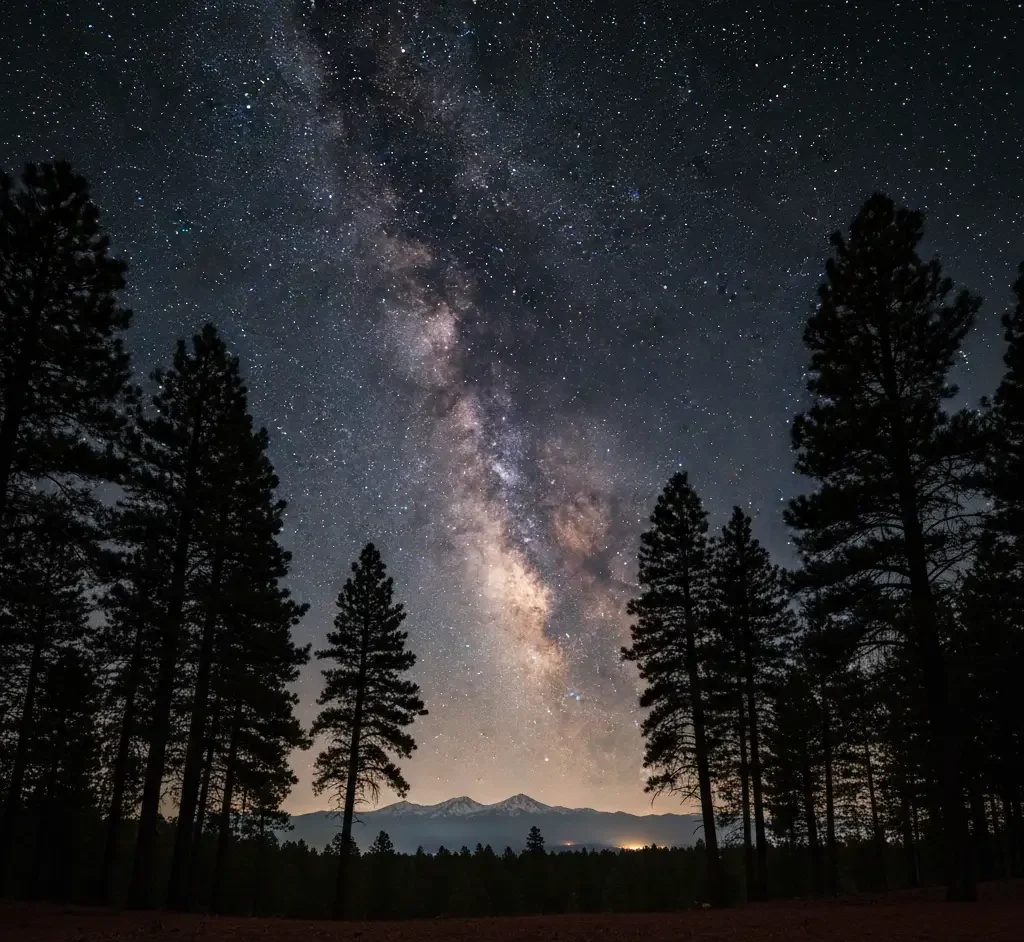
Flagstaff & Dark-Sky Country (Northern AZ)
Flagstaff anchors Arizona’s stargazing scene as the world’s first International Dark Sky City—and sits within easy reach of dark, high-elevation forests and observatories. Use Flagstaff as a launchpad for High Country stays and dark-sky photography between pines and cinder cones. Start here if you want the most night-friendly culture and services.
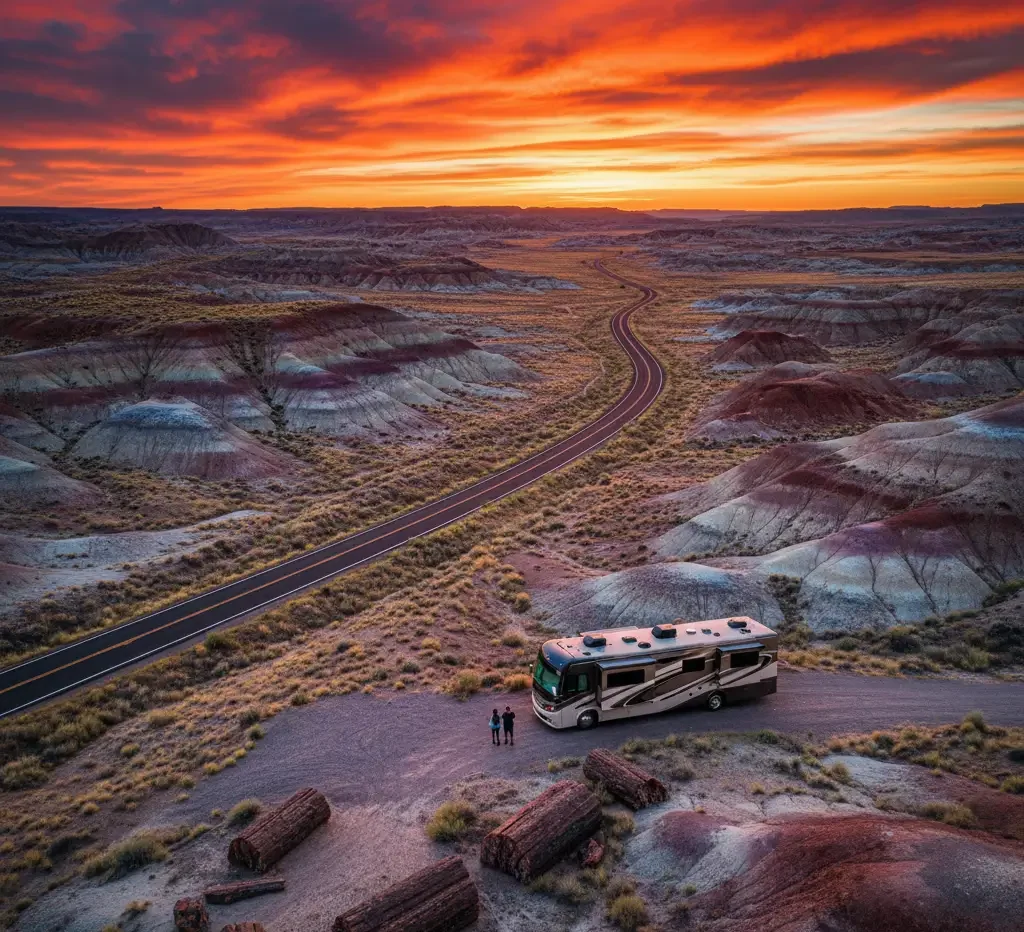
Mogollon Rim & Petrified Forest Vicinity
East of the San Francisco Peaks, the Mogollon Rim and the Petrified Forest vicinity offer wide horizons and fewer city lights—ideal for sweeping Milky Way panoramas and time-lapse work. Pick a base with open sky to the south and minimal tree cover.
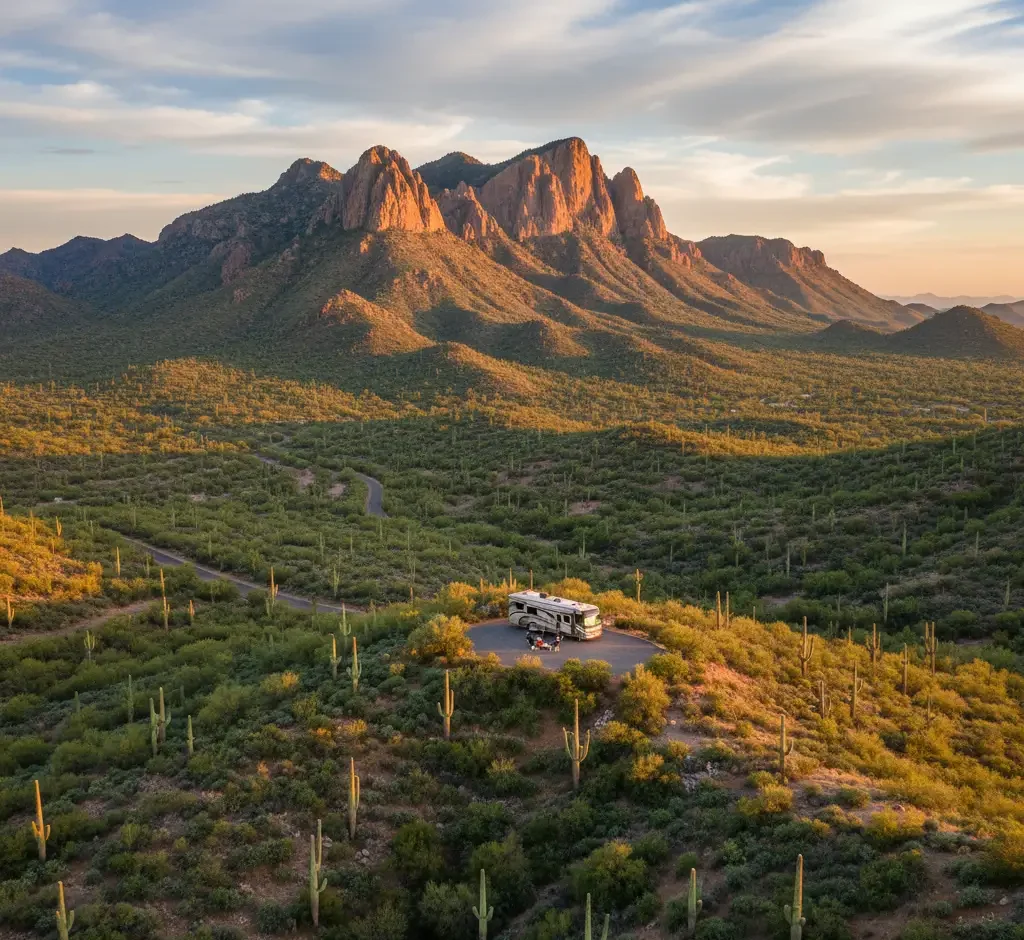
Southeast “Sky Islands” (Cochise–Sonoita–Dragoon foothills)
In SE Arizona, scattered mountain “islands” rise from desert basins, creating dry, dark air and vast night vistas. Base near the sky-island foothills where parks support quiet hours and red-light use; you’ll find some of the state’s least obstructed horizons for deep-sky stacks.
Chasing the Dark: Optimal Observing Windows
True darkness is a moving target. For deep-sky imaging and Milky Way detail, always target the New Moon window (5 days before and after) to avoid lunar washout. Beyond the moon phase, move your basecamp with the seasons.
May – September (Northern Arizona)
This is prime time for capturing the Milky Way Core. Head to high-altitude hubs like Flagstaff or the Mogollon Rim to escape the heat and access the crisp ‘seeing’ conditions required for wide-field astrophotography.
October – April (Southern Arizona)
Winter brings the longest nights of the year—perfect for 12-hour imaging sessions of the Orion Nebula. Shift your optics south to the Sky Islands of Cochise County, where dry air and mild temperatures replace the northern snow.
How to Choose a Park for Night-Sky Work
- Light Management: Shielded fixtures, red-light recommendations, and a posted dark-sky etiquette note.
- Sky Access: Clear southern exposure, minimal tree obstruction, and astro platforms if available.
- Comfort at Night: Windbreaks, late-night restroom access, and enforced quiet hours.
- Connectivity (optional): Wi-Fi or cell signal if you upload raws or livestream; otherwise, prioritize darkness.
- Site Layout: “Quiet-zone” or outer-edge sites to avoid headlight sweep.
Essential Kit for Arizona Skies
Don’t get caught unprepared in the high country. Beyond your tent, ensure your rig includes:
For the Camera: A sturdy tripod (wind resistance is key), fast wide-angle lens (f/1.4–f/2.8), and an intervalometer for star trails.
For the Cold: Dew heaters for your lens and hand warmers for your pockets—Northern AZ nights get cold even in summer.
For the Camp: A headlamp with red mode and spare batteries (cold drains power fast).
- Pro Tip: If you’re new, start with a simple wide-angle Milky Way shot before attempting tracked deep-sky targets.
Code of the Dark: Etiquette for Shared Spaces
- Red Light Rule: Use red lights only to preserve night vision. White beams (even from phones) can ruin a 2-hour exposure for your neighbor.
- Arrival Protocol: Arriving late? Switch to parking lights immediately upon entering the park to avoid sweeping headlights across telescopes.
- Noise Discipline: Mind the quiet hours. In the silence of a dark-sky park, even a shutter click carries.
- Weather Prep: Arizona’s high desert drops 30°F at night. Watch weather + wind and pack layers.
- Boundaries: Respect park rules. Never trespass into closed areas or unoccupied sites for a “better angle.”
FAQs
What is a Dark Sky City and why does Flagstaff matter?
Flagstaff was recognized as the world’s first International Dark Sky City in 2001, signaling robust night-friendly lighting and strong astronomy culture—great news for campers who value dark nights.
What are the best times to photograph the Milky Way in Arizona?
Book new-moon windows and plan for late spring through early fall for the brightest Milky Way core. Use our Moon-Phase Booking Calendar to pick dates.
I’m new—is glamping a good way to try stargazing?
Yes. Glamping near Sedona/Central AZ gives you cozy bases with private decks for night shooting—and a warm bed after.
Are there parks that enforce dark-sky etiquette?
Look for Dark-Sky Friendly & Quiet-Zone Sites tags in our listings and collection pages.
Can I bring pets to late-night shoots?
Many parks are pet-friendly but review each park’s breed/number rules and after-hours policies.
How far are parks from prime viewing areas?
We display drive-times on listings so you can plan safely and efficiently at night.
Chase the Clear Nights, All Year Long
Arizona is a year-round astronomy destination. In the summer, head to Flagstaff (7,000 ft) for cool air and the world’s first Dark Sky City protections. In the winter, point your telescope south to the Sky Islands and Tucson for mild nights and deep-sky visibility. Choose your region to find a dark-sky compliant park.