
Sleep Under the Stars:
Arizona Dark Sky & Quiet Zone Camping
Escape the city glare and the hum of suburbia. Arizona is home to the world’s first International Dark Sky City and vast expanses of protected wilderness. Browse verified campgrounds with strict light-pollution limits, red-light policies, and enforced quiet hours (no generators). Whether you are setting up a telescope for the Milky Way or just seeking total silence, find a site where the only thing loud is the view.
Experience the Darkest Skies in the West
You haven’t seen the sky until you’ve seen it from the high desert. Away from the city glow, Arizona’s campgrounds offer a window into the cosmos that few places on Earth can match. These verified Dark-Sky Friendly parks are located near prime astronomical sites like the Grand Canyon and Lowell Observatory. We’ve highlighted locations with open horizons for telescopes and red-light etiquette to protect your night vision.
Where the Stars Shine Brightest
The Standards of Silence & Starlight
Dark-sky-friendly” parks reduce unnecessary nighttime light, favor shielded, warm-color lighting, and encourage red-light headlamps after dusk. These practices align with the principles popularized by DarkSky International and national parks working to preserve the night.
Preserving the Night
- Shielded Lighting: All park fixtures point down, not out. No glare.
- Red-Light Etiquette: Guests are encouraged to use red headlamps after dusk to protect night vision.
- The Result: A viewing experience aligned with DarkSky International principles, perfect for astrophotography.
Protecting the Peace
- Strict Quiet Hours: typically 10:00 PM – 7:00 AM. No music, no shouting.
- Generator Limits: Essential for peace. Most zones prohibit generator use entirely during quiet hours (or 24/7 in specific loops).
- The Result: You wake up to birdsong, not an engine idling.
When To Go
Moon & Milky Way
New-moon periods offer the darkest skies and best Milky Way views. Avoid bright-moon nights when possible.
Seasons in Arizona
Spring through fall bring warm evening temps; summer monsoon can add clouds in July–August, while high-country nights stay cooler and clearer.
Altitude Matters
Higher elevations (Flagstaff/Plateau) often enjoy clearer, darker conditions than low-desert metros.
Nearby Dark-Sky Attractions
These public lands and communities anchor Arizona’s dark-sky reputation. Plan day trips, ranger programs, and night-sky events—then return to a private park for comfort.
- Grand Canyon National Park — IDA-certified Dark Sky Park; ranger programs and Star Parties.
- Flagstaff — the world’s first International Dark Sky Place (2001).
- Sedona International Dark Sky Community with lighting codes that protect the night.
- Flagstaff Area National Monuments — joint Dark Sky Park designation (Wupatki, Walnut Canyon, Sunset Crater).
How To Stargaze Respectfully
Great nights start with courtesy and conservation. Follow these simple guidelines so everyone can enjoy the sky.
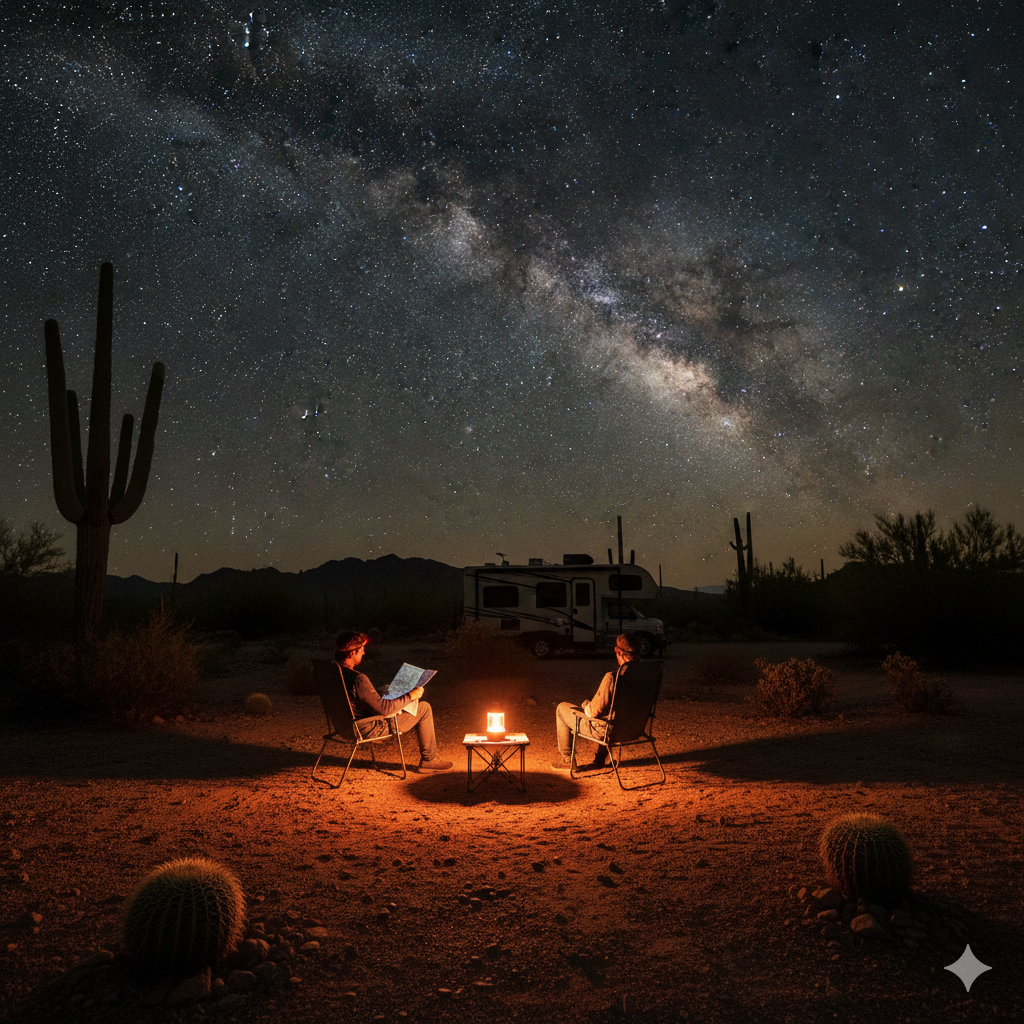
- Switch to red-light headlamps; avoid white flashlights and bright phone screens.
- Observe posted quiet hours (typically 10 pm–6/7 am). Lower voices, no speakers, no generator use overnight.
- Park so headlights won’t sweep other campsites when you depart. (Star-party etiquette standard.)
- Keep lanterns shielded and low; never aim lights upward.
- Leave no trace: pack out trash, protect cryptobiotic soils, and stay on signed routes in the desert.
For Astrophotographers
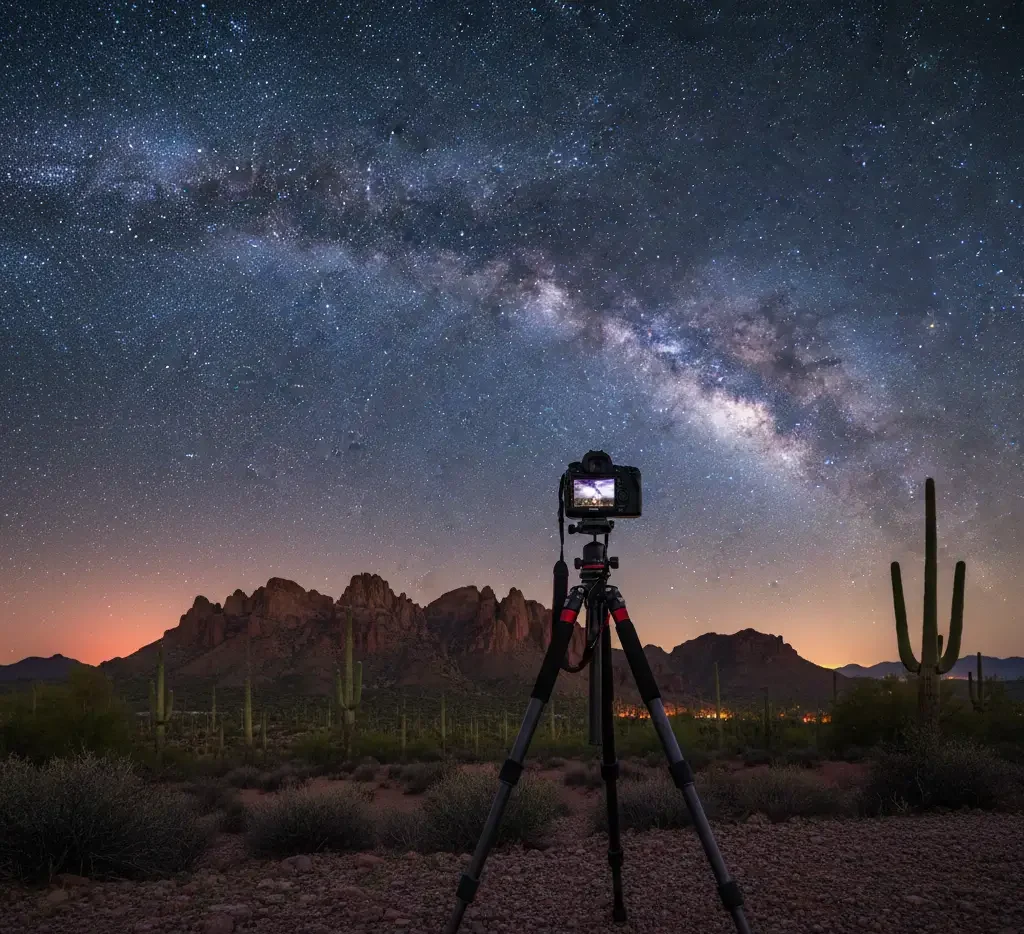
Bring a sturdy tripod, wide-aperture lens, interval timer, and extra batteries. Scout a foreground before dark, focus at infinity on a bright star, and shoot during new-moon windows. Use dim red light and avoid light painting near others.
- Lights are fully shielded and pointed down where light is required.
- Guests are encouraged to use red-light headlamps and dim screens at night.
- Generators, speakers, and bright exterior lights are not used during quiet hours.
Frequently Asked Questions
What is an International Dark Sky Place?
It’s a place certified by DarkSky International for protecting natural night skies through responsible lighting, education, and long-term management.
Why is Flagstaff famous for dark skies?
Flagstaff was designated the world’s first International Dark Sky Place in 2001, reflecting decades of lighting policy leadership.
What are typical quiet hours at Arizona campgrounds?
Policies vary, but many public and private campgrounds post quiet hours around 10 pm–6/7 am. Always check your park’s rules.
Do I need special gear to see the Milky Way?
No—on clear, dark nights your eyes work best. A red-light headlamp and a simple reclining chair help you see more comfortably.
Are there ranger-led stargazing events?
Yes. Places like Grand Canyon National Park host Star Parties and night-sky programs seasonally.
Ready to Experience True Darkness?
You know the etiquette. You have your red light ready. Now, secure a campsite where the only thing glowing is the Milky Way. Browse our list of verified Dark-Sky Friendly parks that guarantee shielded lighting, silent nights, and the best views in the Southwest.